


About this report
To inform the development of this report, the United States Studies Centre (USSC) at the University of Sydney convened a group of government officials, industry representatives and experts from Australia, the United States, Japan, South Korea and Singapore to discuss how Australia and its allies can support regional energy security, both in the immediate term and in the future.
The roundtable was held under Chatham House Rule and was focused specifically on what the US-Iran conflict means for energy security in Australia and the Indo-Pacific, and how allied nations can support regional energy security. This project was supported by Santos, and energy experts were drawn from a wide range of industries, countries and perspectives. All participant views were their own and do not necessarily represent the views of the USSC or our partners. The United States Studies Centre maintains intellectual freedom and sole editorial control over content, projects and research activities.
Executive summary
The US-Iran conflict is dramatically reshaping the global energy order, with major implications for the Indo-Pacific. Countries in Asia were not uniformly prepared for an energy supply shock of this magnitude and duration. Limited fuel stockpiling, an overdependence on Middle Eastern supply, insufficient energy diversification and fragmented coordination across the region have created major economic, fiscal and social costs that threaten future economic growth.
This disruption has also demonstrated the extent to which Indo-Pacific energy security is a core Australian national interest.
Over the past decade, Australia’s fuel security has eroded as domestic oil refining capabilities have moved offshore and fuel demand has grown. Australia imports over 80% of its refined fuel needs, predominantly from Asian refining hubs such as South Korea and Singapore.1 Without reliable energy supply to the region, Australia’s economic and national security could be compromised.
This dependency is likely to persist for many years, if not decades. While electrification of Australia’s economy offers a long-term solution to improving our energy security, it will take time. Immediate actions to shore up Australia’s fuel security in the near-term would complement Australia’s broader strategy for long-term fuel security, which includes electrification.
This report sets out how the global energy system is shifting, why Australia should play a leading role in supporting regional energy security and what an energy security partnership could aim to achieve.
Recognising the imperative to act, the United States Studies Centre convened government officials, industry representatives and energy experts from across the Indo-Pacific region to examine how Australia and its partners could strengthen regional energy security. Three conclusions emerged.
First, regional partners are looking to Australia to help secure their long-term energy needs. In the face of this energy supply shock, Asian nations are reassessing their supply chain dependencies and relationships. Australia, as one of the world’s largest and most stable energy exporters, has a major opportunity to expand its role in providing regional energy security. However, shifting domestic energy policies have impacted Australia’s international reputation as a reliable energy partner.
Second, the Indo-Pacific needs to build greater energy system resilience and preparedness. Countries in the region should spread their risk by drawing from a wider array of existing energy security frameworks. The Strait of Hormuz disruption exposed regional vulnerabilities created by a lack of diverse energy supply chains, limited fuel stockpiles, insufficient fuel diversification and weak regional coordination. Concerted regional efforts are required to improve system resilience, and Australia has an important role to play.
Third, Australia should lead the establishment of an Indo-Pacific energy security partnership with key allies and partners. The partnership would bring together Australia, the United States, Japan, South Korea and Southeast Asian partners to strengthen regional preparedness and diversify energy supply. It could focus on four areas: building a strategic energy supply buffer and other forms of energy resilience like electrification; establishing robust crisis coordination mechanisms; mobilising allied investment; and strengthening Australia's domestic capacity to remain a reliable regional energy supplier.
This report sets out how the global energy system is shifting, why Australia should play a leading role in supporting regional energy security and what an energy security partnership could aim to achieve.
Establishing an Indo-Pacific energy security partnership
Strategic rationale
Regional energy security is a core Australian national interest. As evidenced by the Strait of Hormuz closure, disruptions to Indo-Pacific energy supply chains have direct flow-on impacts on Australia’s own fuel, economic and national security.
As a reliable, high-volume energy exporter, Australia should help build a more resilient and diversified regional energy system and embed itself in the region’s long-term energy landscape. By playing a major role in guaranteeing regional energy security, Australia can also protect itself from future energy shocks. At a high level, Australia should seek to promote:
- A resilient region that is prepared for future energy supply shocks
- Deeper regional coordination and integration on energy security
- Abundant, reliable and diversified energy supply to the region
- Significant, long-term flows of Australian energy exports to the region
This could be supported through four structured Lines of Effort.
Lines of Effort
1. The objective: Build resiliency, preparedness, and diversity of supply
- Energy supply buffer. Encourage best-practice fuel stockpiling and emergency response measures to create a strategic supply buffer across the Indo-Pacific.
- Regional energy independence. Increase the share of total energy consumption being met by local and regional (including Australian) suppliers to reduce dependence on Middle Eastern supply.
- Supply diversification. Support a scale up in clean energy technology manufacturing, particularly in Southeast Asia, to diversify supply to the region.
2. The mechanism: Expand regional coordination and integration
- Market integration. Support an integrated electricity grid and gas market across Southeast Asia to improve energy security and strengthen institutional coordination.
- Institutional integration. Facilitate joint ventures and enable more coordinated pooled investment into large-scale energy projects to maximise economies of scale.
- Information integration. Build capacity in high-quality data collection, real-time energy market data tracking and forecasting of future energy demand and mixes.
3. The partners: Strengthen regional cooperation with partners on energy security
- Japan. Partner with Japan to direct investment towards resiliency infrastructure, support existing regional energy security efforts such as Asia Zero Emission Community2 and POWERR Asia,3 and attract investment into new energy supply.
- The United States. Continue to collaborate with the United States to ensure free and open sea lanes across the region and protect subsea cable infrastructure.
- The Quad. Work with the Quad to keep regional attention on energy security issues and help coordinate a regional response to energy supply chain risks.
- ASEAN. Deepen engagement and support for ASEAN energy security initiatives under ASEAN Plan of Action for Energy Cooperation (APAEC) 2026-2030, such as the ASEAN Power Grid Initiative.
4. The enablers: Australia’s domestic policy settings
Roundtable participants also highlighted some key domestic policy settings that could be calibrated to enable Australia to continue playing a major role in regional energy security. Some key discussion points included:
- Making Australia a top destination for energy investments
- Ensuring Australia has the energy it needs to meet domestic demand
- Providing regulatory and policy certainty to energy investors
- Unlocking growth in new energy exports to expand Australia’s role in supporting regional energy security
The shifting global energy order
The global energy market has faced shocks before. The most notable were the 1970s oil crises, which shifted the power balance between energy consumers — the United States and Europe — and energy producers — Saudi Arabia, Iran and Iraq. In response, the Organisation for Economic Cooperation and Development (OECD), a group of developed nations, formed the International Energy Agency (IEA) in 1974. Membership in the IEA is only open to OECD countries, and 32 of 38 OECD members participate.4
The IEA is tasked with promoting energy system resilience and preparedness by ensuring that member countries maintain a minimum 90-day fuel stockpile. The IEA also coordinates emergency response measures, including when fuel stockpiles are released.
But now, successive energy shocks created by Russia’s invasion of Ukraine and Iran’s blockade of the Strait of Hormuz are reshaping the global energy order once again. These geopolitical shocks are being compounded by a boom in energy demand from AI data centres and the renewable energy transition.
In this context, countries around the world are now reassessing their energy supply chains, dependencies and fuel mixes to secure supply and minimise disruption risks. These crises have also demonstrated limitations in the current frameworks designed to withstand such energy supply shocks.
This section steps through five key shifts in the global energy order and what they mean for the Indo-Pacific.
Ultimately, this shifting global energy order indicates a clear need for an energy security framework that better supports the Indo-Pacific’s long-term needs.
A shifting global energy order: Perspectives from roundtable participants
- Globally, many countries are becoming increasingly strategic about how they buy and sell energy. Russia has weaponised its energy exports; the United States has leveraged its energy exports in trade negotiations; and countries are treating their demand as a bargaining asset.
- Asian economies have felt the brunt of the closure of the Strait of Hormuz. Many Indo-Pacific nations were not adequately prepared for such a significant energy supply shock and greater resiliency and preparedness across the region is needed.
- The crisis has fundamentally changed mindsets around energy security and governments across the region are reassessing their energy needs and international trade relationships.
- The energy supply shock has also shifted the immediate focus from the clean energy transition towards energy security. The expected increase in energy demand from AI data centres is also likely to put added pressure on regional energy supply.
- Energy relationships are no longer purely commercial — they are increasingly being built on trust and reliability.
Five key shifts of the global energy order, and what they mean for the region
1. The Indo-Pacific felt the brunt of the Strait of Hormuz closure
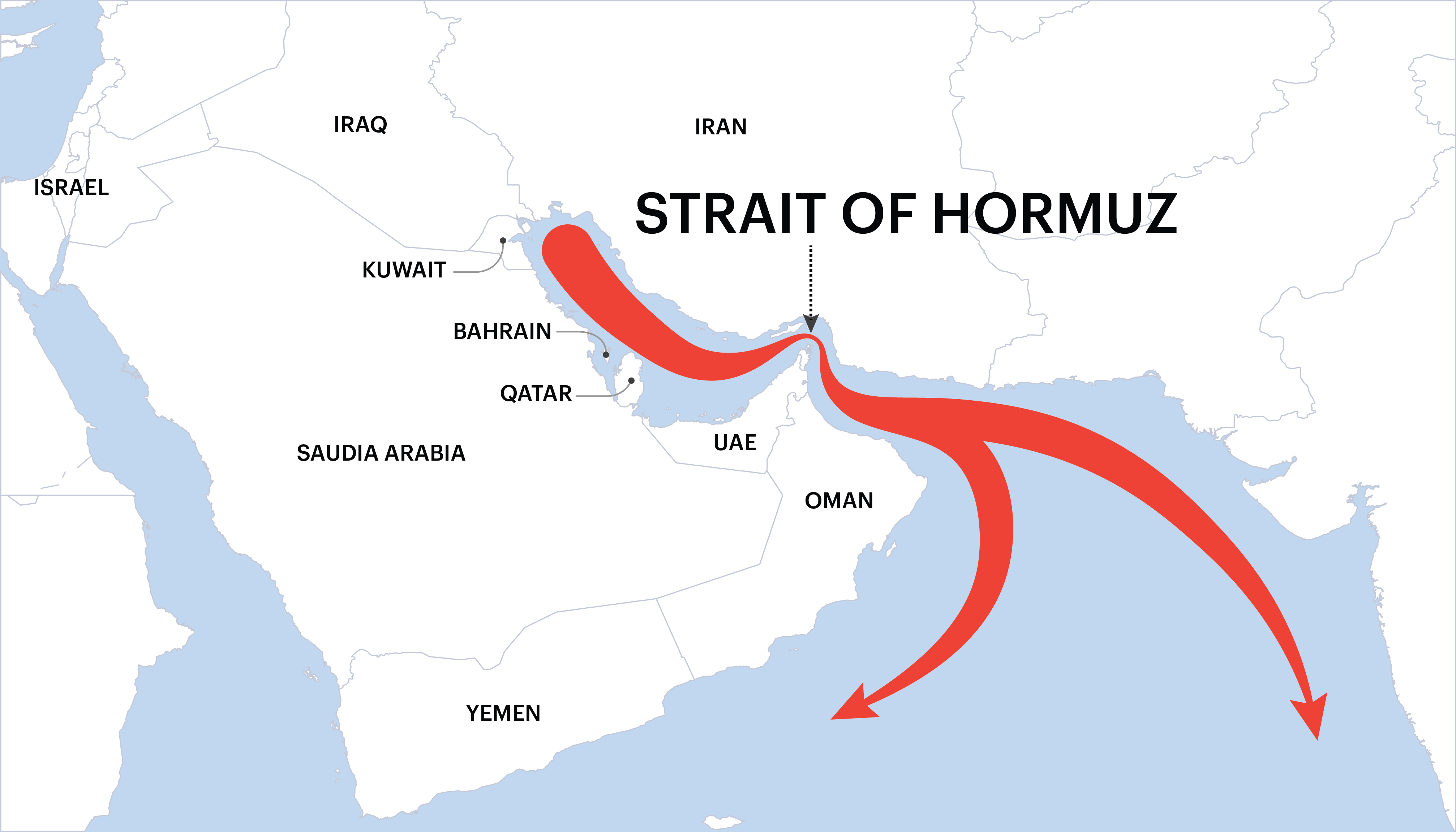
The Strait of Hormuz is one of the world’s biggest trade chokepoints, with an estimated one-fifth of global oil and liquefied natural gas (LNG) transiting through the strait in 2025.5 The impacts of this closure have been significant. No region has felt the impact of the Iran war on energy markets more acutely than the Indo-Pacific. As a result of the closure of the Strait, Asia lost 60% of its oil supply and 27% of its natural gas supply.6 Figure 1 shows how reliant key Indo-Pacific countries are on oil supplies transiting through the Strait of Hormuz.
Figure 1. Dependence on Strait of Hormuz for oil imports (% of total oil imports transiting the Strait)
Source: Reliance on Middle East Oil and Gas Supplies by Country — IEA.
Note: Dependency is calculated as the volume of oil imports from the Middle East as a share of domestic consumption and exports. All data is for 2024.
In April 2026, oil prices surged by 75%, reaching US$126 per barrel of Brent crude at the peak, up from US$72 per barrel before the war.7 This had major impacts on economies across the region, particularly lower-income nations. Elevated oil and natural gas prices have led to an additional US$3.36 billion in energy costs per month across Southeast Asia and impacted access to basic energy needs such as cooking, heating and power.8
Further, many of Australia’s major fuel suppliers in Asia were hit by crude oil supply shortages, creating concerns that Australia would run out of petrol, diesel and jet fuel. Australia is highly dependent on imported fuels and ranks among the largest consumers of diesel per person in the world.9 Imported fuels are essential to powering Australian vehicles, farm machinery and mining equipment.
What this means for the region
- Many Indo-Pacific nations are overly dependent on energy supply through the Strait of Hormuz. Asian countries are reassessing their supply chain dependencies and are actively seeking to diversify.
- Australia’s energy security is intrinsically linked with regional energy security. Maintaining energy supply to the region is critical for prosperity and stability. It is in Australia’s interest to make concerted efforts to support regional energy security, including by remaining a stable supplier of LNG.
2. Energy supply through the Strait of Hormuz is no longer secure
After several months of conflict between the United States and Iran, it is becoming clear that there are limited opportunities for the Trump administration to de-escalate without some concessions. Through the conflict, the Iranian regime has seized control of the Strait of Hormuz, allowing it to inflict significant economic damage to the global economy. Iran is unlikely to give up this control easily and is looking to entrench its control by setting up a government agency to manage the Strait and impose tolls on passing ships.10
Other ongoing conflicts in the region, such as between Israel and Hezbollah and Hamas, and Saudi Arabia and the Houthis, add another layer of instability, with the potential to escalate into broader regional tensions. In addition, energy production and transport infrastructure in the Gulf remain vulnerable to strikes. Alternative oil routes in the region, such as diverting oil to the Red Sea through the Saudi Arabian East-West Pipeline, have also proven unreliable or insufficient.

There is no clear resolution in this conflict that could facilitate a return to the status quo of free and open navigation through the Strait of Hormuz. This is likely to have permanent impacts on global energy trade.
Attempts to reopen the Strait have proven unsuccessful. As shown in Figure 2, LNG volumes passing through the Strait remain well below pre-conflict levels due to lack of alternative shipping/pipeline routes and limited scope for ship-to-ship transfer of LNG.
Crude oil supply through the Strait has improved with heavy US military support and a costly ‘shuttle system’ where smaller tankers are transporting oil through the Strait and then transferring this oil to larger tankers in the Gulf of Oman. However, this system and the US military support required is viewed as financially unsustainable, and has added to higher fuel prices.11
What this means for the region
- Energy supply through the Strait of Hormuz faces a structurally higher geopolitical risk premium. Insurance costs for shipments moving through the Strait surged by more than 1000% at the height of the conflict (an additional US$7 million per vessel) and are expected to remain elevated as uncertainty persists.12 This premium will be passed on to consumers.
- Even with a full and sustained reopening of the Strait of Hormuz, it will take time for energy supplies to return to pre-conflict levels. The conflict has caused long-term damage to energy infrastructure in the region, with oil and gas facilities across Qatar, Saudi Arabia and Iran impacted. Repairing these facilities will be costly and time-intensive, with an estimated minimum US$58 billion required for Gulf energy infrastructure repairs.13
- The conflict will have lasting implications for the Gulf’s reliability as a global energy supplier. Large-scale energy production is reliant on predictable, long-term sales contracts to mitigate risk and secure investment, with typical contracts ranging from 10–15 years.14 The disruption to regional energy production has forced suppliers to declare force majeure on these long-term contracts,[^i] impacting the Gulf’s perception as a reliable energy supplier. Indo-Pacific energy consumers will need to identify new supply sources and hedge risks associated with Gulf supply.
i. Force Majeure is a legal clause that excuses a party from fulfilling contractual delivery obligations due to unforeseeable, uncontrollable events, such as war.
Source: WTO. Note: Data captures AIS-traceable vessels only.
3. The Indo-Pacific now dominates global energy consumption, but is not protected by existing energy security frameworks
When the IEA, the principal organisation for coordinating energy security for developed nations, was established in 1974, the developed world dominated global energy demand. As shown in Figure 3, at the IEA’s inception, its members accounted for 67% of global energy consumption.
Now, global energy consumption has overwhelmingly shifted toward non-IEA members, particularly in the Indo-Pacific region. Today, only 36% of global energy consumption is currently captured under the IEA’s framework. Despite this, most countries in the Indo-Pacific are ineligible to become members of the IEA — membership is only available to OECD countries. Currently, the only Indo-Pacific countries included as full members of the IEA are Australia, Japan, New Zealand and South Korea.

Major Indo-Pacific energy consumers — China, India, Vietnam and others — are not bound by core IEA obligations. While some have emergency fuel stockpiles, particularly in China’s case, they are not held to any requirement to maintain emergency oil stocks in the same way full IEA members are. Further, there is limited transparency around the scale of any emergency fuel reserves or the release of these reserves by non-IEA members. This has contributed to a lack of regional preparedness for major energy supply shocks. Furthermore, the absence of a formal coordination mechanism, which the IEA provides for developed countries, has led to fragmented responses and supply competition across the region.
What this means for the region
- A lack of fuel stockpiling leaves the region vulnerable. Without deeper fuel stockpiles across the region, countries will remain vulnerable to energy supply shocks. However, fuel stockpiling is expensive and comes with a series of logistical, environmental and social considerations.
- The need for a regional coordination mechanism. In the same way that the IEA helps coordinate emergency response measures for OECD nations, a similar coordinating body could support Indo-Pacific energy security. Australia and allies could help support this. In May 2026, disparate views across the Association of Southeast Asian Nations (ASEAN), a regional economic body with members across Southeast Asia prevented agreement on a binding collective response to the energy crisis, demonstrating a clear gap in energy security coordination in the region.15
Figure 3. Non-IEA countries now consume more energy than IEA members
Energy consumption compared, 1965-2024
Source: Energy Institute.
4. Shifts in energy consumption from oil to natural gas and renewables create new energy security needs
The global energy fuel mix has shifted since the IEA’s inception five decades ago. As shown in Figure 4, consumption of fuels like coal and oil, while still prevalent, has declined as a share of total consumption. Natural gas consumption, which has grown as a share of total energy demand from 17.6% in 1974 to 23.6% in 2024. In Southeast Asia, specifically, gas usage in the power sector is projected to rise over 60% by 2050 under current policy settings while domestic supply is predicted to decline by one-third.16 This presents new energy security challenges that the IEA’s original framework was not designed to address.
Unlike oil, there is no requirement for IEA members to stockpile LNG, meaning LNG markets are more vulnerable to supply shocks. Further, secure LNG supply requires fixed capital-intensive infrastructure on both ends of the supply chain, including specialised import and export terminals, pipelines, and shipping. This makes it difficult to redirect LNG supply and to stockpile; stockpiling LNG can be five to ten times more expensive than oil stockpiling.17
Figure 4. Global energy consumption by source, 1965–2024
Source: Energy Institute. Note: Other renewables include geothermal, biomass, and waste energy.
For Southeast Asian countries, energy diversification is now a central priority, with many turning to clean energy and electrification to reduce their reliance on imported fuel. Once installed, clean energy technologies, like solar panels and wind turbines, can help insulate countries from the impacts of external energy shocks and strengthen their energy resilience.
However, many Asian countries are becoming wary of an overdependence on Chinese supplies of clean energy generation technologies.18 Figure 5 shows that the supply of clean energy technologies crucial for the energy transition is more concentrated than the supply of natural gas and oil. China is the main supplier in most stages of the supply chain, accounting for around 85% of solar and 80% of lithium-ion battery supply chain production capacity. China’s market dominance is even higher for key components such as photovoltaic (PV) wafers in solar panels (95%) and anode materials used in lithium-ion batteries (97%).
Some Southeast Asian countries are cautious about swapping out fuel dependencies for technological dependencies, especially noting China’s current dominance in these technology markets.
Figure 5. Clean energy supply chains are highly concentrated in China
Geographic concentration of supply chains for select fossil fuels and clean energy technologies
Source: IEA. Note: Dark circles above some of the clean energy technologies denote supply concentration of key technological components.
5. Meeting Southeast Asia’s growing energy demand will require more energy in all forms
As Indo-Pacific energy demand increases, the region’s exposure to global energy markets will persist. Many countries in Southeast Asia are still developing, with roughly two-thirds having a GDP per capita below the regional average (US$9,360).19 As these economies develop, incomes rise, consumption surges and overall energy needs increase. As visualised in Figure 6, under current policy settings, the IEA projects Southeast Asia’s energy demand to continue to grow until at least 2050.

As part of this, fossil fuels are expected to make up more than 60% of Southeast Asia’s energy demand in 2050, meaning that exposure to global oil and gas markets is likely to persist for decades ahead.
Furthermore, energy demands from the digital economy boom and AI buildout are already facing bottlenecks, threatening to constrain Southeast Asia’s growth prospects. This strain will only increase, with electricity demand from data centres expected to more than double by 2030.20 At the same time, governments are seeking to reduce emissions, with countries in the region committed to net-zero targets between 2050 and 2070. These factors all compound pressures on a developing energy grid seeking to balance affordability, economic growth, security and sustainability.
What this means for the region
- The region is not deploying clean energy infrastructure quickly enough to shield it from global energy shocks. Even with an impressive scale-up of renewable energy technologies, the additional consumption driven by economic growth and the AI boom means that fossil fuels will remain a significant part of the region’s energy mix beyond 2050. Thus, exposures to future global energy shocks are likely to persist.
- Energy infrastructure in the region requires significant investment. Meeting the region’s growing energy demand depends on enabling infrastructure such as grids and storage to enable countries to shift energy from resource-rich areas to major demand centres. To meet announced pledges, annual investment will need to increase from US$13 billion today to US$50 billion in 2050. This scale of sustained investment will require support from partners like Australia.21
- A continued need for Australian LNG exports to the region beyond 2050. Southeast Asia’s annual demand for natural gas is projected to increase by 50% by 2050 (from 6 EJ[^ii] in 2025 to 9 EJ in 2050). This points to a continued need for Australian LNG exports to the region to help support energy security. However, Australia should look to support regional partners in managing exposure to market volatility.
ii. EJ (Exajoule) is a measure of energy.
Figure 6. Energy demand in Southeast Asia projected to grow until at least 2050
Energy demand and CO2 emissions in Southeast Asia in the Stated Policies Scenario, 2015-2050
Source: IEA. Note: Exajoules (EJ) are a measure of energy. For reference, annual global energy consumption is roughly 600 EJ. Gigatonnes of carbon dioxide (Gt of CO2) are a measure of carbon emissions. For reference, annual global carbon emissions is around 38 Gt.
Why Australia must play a leading role in the new energy order
Australia’s economic and national security are intimately linked to the Indo-Pacific’s energy security. Decades of trade and economic integration have created a tight-knit ecosystem across the region. This became clear during the early stages of the US-Iran conflict. Australia’s major regional suppliers of petrol, diesel and jet fuel were hit by supply shortages, creating concerns that Australia would run out of these liquid fuels.
Australia is highly dependent on imported fuel from the Indo-Pacific. When fuel supply to the region is insecure, it has a direct flow-on impact on Australia’s national and economic security.
In response to the energy shock catalysed by the US-Iran conflict, Australia’s Prime Minister Anthony Albanese and Foreign Minister Penny Wong quickly engaged in a series of diplomatic missions with trading partners, including:
- Japan
- South Korea
- Brunei Darussalam
- Singapore
- China
- Malaysia
- Vietnam
There are common threads across the joint statements released during these representations. First, they each reframed energy security as a shared regional priority. Second, they highlighted Australia's important and reciprocal energy relationship with each of these partners. Australia’s position as a dominant and stable supplier of natural gas, coal, and liquid fuels helped to secure fuel supplies from regional partners during this oil supply crisis. Third, almost every statement identified deeper regional cooperation, supply diversification and clean energy as practical steps towards energy security over the longer term.

Figure 7 highlights the extent of Australia’s complementary energy relationship with countries in the region: 77% of Australia’s fuel imports come from the same six countries that consume 92% of Australia’s LNG exports and 65% of Australia’s coal exports. Further, 70% of Australia’s fuel imports come from non-IEA member states that are not required to maintain emergency fuel reserves.
77% of Australia’s fuel imports come from the same six countries that consume 92% of Australia’s LNG exports and 65% of Australia’s coal exports.
Many of Australia’s largest energy consumers are expected to see increased demand for Australian energy resources in the future. Malaysia, traditionally a major LNG exporter, sources 95% of its imported LNG from Australia to meet growing demand that its existing offshore gas deposits cannot because of a lack of pipeline infrastructure connecting production sites to demand centres.22 This imported LNG makes up around 30% of Malaysia’s total consumption for gas-fired electricity generation.23
Figure 7. Australia has a reciprocal energy relationship with the countries in the region
Australian LNG and coal exports and fuel imports from key Asian markets
Sources: DFAT, USSC analysis.
Maintaining Australia’s energy exports and meeting its net-zero target: Perspectives from roundtable participants
The roundtable participants discussed the perceived tension between the language and intent of these joint statements to maintain Australia’s exports of LNG and coal to the region with the stated goals of decarbonising the Australian economy. It was observed that:
- While this tension exists, roundtable participants viewed this as manageable — the Australian Government can continue to support regional energy security while also meeting its net-zero target.
- Australia cannot fully insulate itself from energy shocks affecting its regional partners and, therefore, should continue to contribute to regional energy security to protect its own economic security. Even as Australia decarbonises its economy and reduces fuel imports, it is likely to remain deeply embedded in regional supply chains, including imports of fertilisers, critical technologies and other energy-intensive products.
- Australia’s energy exports are a strategic asset. Ceding Australia’s position in regional energy supply chains, particularly to less reliable suppliers, would risk weakening an important pillar of Australia’s economic security and strategic influence and would not be helpful in supporting regional decarbonisation.
- The volume of Australia’s energy supply could be expected to closely follow the volume of regional energy demand, which is expected to grow over the next few decades.
- Australia’s supply of energy exports should shift as the regional energy demand profile shifts. Over time, the Indo-Pacific will increase its consumption of renewable energy technologies. Australia should seek to capture growth opportunities in these export markets to help extend its position as an indispensable energy supplier to the region. Australian government objectives around critical minerals and the Future Made in Australia industry policy could be supported by establishing a regional energy security partnership.
- To support regional energy security, Australia will likely need to maintain some level of LNG exports to the region beyond 2050. Thus, meeting Australia’s net-zero targets will require concerted policy and investment efforts to support emissions reductions in the LNG export sector through carbon capture and storage (CCS) and electrification.
Australia is the only stable high-volume LNG producer in the Indo-Pacific
The dual energy crises caused by the conflicts in Ukraine and Iran have left the Indo-Pacific with few options for stable, high-volume LNG supply (see Figure 8). Compared to Australia, other high-volume LNG suppliers — Russia, Qatar and the United States — are not as well-placed to meet Asia’s growing LNG demand.
Russian exports are heavily sanctioned in the wake of its continued conflict with Ukraine. Many Asian economies have joined this global sanctioning effort against Russia. As long as this war continues, Russian LNG supply cannot be viewed as stable or secure.
Qatari exports could be held hostage in the Strait of Hormuz if Iran maintains some form of control over the passage. Qatar, as a peninsula in the middle of the Persian Gulf, has limited options to pipe its natural gas to avoid the Strait. Doing so would require investing billions in piping gas through neighbouring countries. While Iran has leverage over the Strait of Hormuz, Qatari LNG exports cannot be guaranteed.
US export terminals, both existing and under-construction, are located in the Gulf of Mexico, far from Asian markets (see Figure 9). Shipments of LNG from export terminals in the Gulf Coast must transit through the Panama Canal to reach Asia, with a return trip taking 40 days.24 Australian LNG exports can reach Asia and back in just 14 days. During a time of crisis, this shorter transit route could provide an important security buffer. Further, Asian LNG consumers will also need to compete more directly with European consumers, who currently purchase 66% of US LNG exports and are typically willing to pay a higher price.25 While US exports to Asia are expected to grow over the next few years, Australian supply will still make an important contribution to regional energy security.
Figure 8. Australia is Asia's largest LNG supplier
Sources: IEEFA, Kpler, USSC analysis.
Figure 9. US LNG export capacity is heavily concentrated in the Gulf of Mexico
US LNG export capacity forecasts (billion cubic feet per day of capacity, 2030)
Source: Incorrys. Note: Size of bubble reflects export capacity volume.
Australia is helping diversify clean energy export markets and renewables rollout
but must act faster
China dominates global manufacturing in solar panels, batteries and wind turbines and is also investing heavily in hydrogen production.26 This represents a major supply chain dependency, for the broader region as well as for Australia.
With the right regulatory settings and market conditions, there is potential for Australia to become a supplier of renewable energy and of low-emission energy-intensive products into new technology supply chains, which could help diversify supply and rollout of these new, green export industries. This is possible due to Australia’s massive renewable energy resources (solar and wind), critical mineral endowments and proximity to Asian markets, as outlined in the Australian Government’s Future Made in Australia strategy.27 Further, Australia leads in solar penetration and has significant experience in grid management, particularly with managing decentralised resources.28 These advantages could allow Australia to play an indispensable role in supporting regional energy transitions.
However, these strengths currently only represent potential growth. Success will require sustained policy effort, major advancements in renewable technologies and collaboration with Australia’s regional partners.
The role of Australia’s partners – oil supply, financing and clean energy
While Australia has significant energy resources, it cannot meet the Indo-Pacific’s energy needs alone. Australia does not have the existing infrastructure to provide high-volume oil supply to the region, is dependent on overseas financing and has limited clean energy manufacturing capacity. There is a clear role for regional partners — the United States, Japan and others — to fill these gaps.
While Australia has significant energy resources, it cannot meet the Indo-Pacific’s energy needs alone.
- Oil supply. The United States is the largest oil producer in the world, thanks to the development of shale oil extraction methods. Canada is also a major producer, ranking fourth in the world.29 Both these countries are well-positioned to support the Indo-Pacific’s demand for oil over the coming decades.
- Project financing. Investment from Japan, South Korea and Singapore will be crucial to unlock new supply to meet the region’s future demand. Other Indo-Pacific nations, particularly in Southeast Asia, do not have the scale and capital needed to invest in massive energy projects which can cost tens of billions of dollars. Japan’s US$10 billion POWERR Asia investment fund, announced in response to the Strait of Hormuz closure in 2026, will play a major role in providing finance across the region.30 The program is designed to support emergency response measures across Asia and expand system resilience through fuel stockpiling and energy diversification.
- Clean energy. Several regional partners are making investments to scale their clean energy manufacturing, which includes solar and wind, batteries and electric vehicles. For example, India’s Production Linked Incentives scheme has dramatically increased solar manufacturing output.31 In addition, Japan’s Green Transformation Policy directs US$120 billion towards decarbonisation efforts.32 The United States’ battery manufacturing capacity is also set to grow by up to fivefold, from 302 GWh of capacity in 2024.33 Countries can also support the deployment of clean energy technologies. Under the Asia Zero Emission Community, Japan has pledged US$10 billion in public and private support for ASEAN’s energy transition and invested in the ASEAN Power Grid.34
An Indo-Pacific energy security partnership
As this report has established, Asia’s energy security is Australia’s national interest. Strategically, it is critical that Australia plays a major role in supporting regional energy security. The suite of bilateral joint statements Australia has signed with regional partners is a strong foundation for Australia to knit together a more comprehensive and longer-term partnership.
This partnership would closely align with the Plan of Action to Implement the ASEAN-Australia Comprehensive Strategic Partnership (2025-2029), which outlines a series of activities for ASEAN and Australia to work together to contribute to peace, prosperity and stability in the region.35 It would also support the objectives outlined in the ASEAN Plan of Action for Energy Cooperation (APAEC) 2026-2030, which sets out measures to improve ASEAN energy cooperation and integration.36
Building on the strategies outlined in each of these two documents, this section presents the rationale, objectives and activities for an Indo-Pacific energy security partnership.
The suite of bilateral joint statements Australia has signed with regional partners is a strong foundation for Australia to knit together a more comprehensive and longer-term partnership.
An Indo-Pacific energy security partnership: Perspectives from roundtable participants
- Australia has signed numerous fuel security agreements with regional partners, including the Quad countries (Australia, the United States, Japan and India) and South Korea, Vietnam and Singapore. There is an opportunity to combine Australia’s new energy agreements into a more comprehensive energy security partnership.
- A non-binding partnership or framework would be best suited to bringing a diverse set of regional stakeholders to the table to agree on a common set of principles. Participants also suggested leveraging existing multilateral settings like the Quad, the Indo-Pacific Energy Security Ministerial Meeting or ASEAN working groups.
- While the United States could be an important partner in this endeavour, Australia need not wait for the United States to lead this initiative: Australia could independently propose and gain regional buy-in for an energy security partnership.
- Australia’s strength as an LNG exporter to regional partners will be central to this energy security partnership. To meet other aspects of regional energy demand — particularly oil and clean energy — Australia would need to partner with the United States, Japan and others.
Strategic rationale
The strategic rationale for Australia to maintain and even expand its role in supporting regional energy security is clear. Australia is dependent on stable and high-volume supply of liquid fuels, fertilisers and manufactured goods from Asia, which are in turn dependent on secure energy supply.
Australia brings considerable strengths to the table. It is an indispensable energy supplier to the region, particularly for LNG, which has been a huge asset to the Australian Government and public throughout the current energy supply shock, and has significant expertise in renewable energy deployment and grid management. Failure to fill this role will reduce Australia’s leverage to secure its own supplies of fuel and critical imports from partners in a future crisis. Australia’s importance in the region should extend to other key nodes along the energy value chain, particularly in supplying the critical minerals needed for renewable energy technologies.
With heightened awareness of their energy supply chain risks, many regional partners are looking for additional Australian support for their energy needs. Roundtable participants stated that this presented Australia with a major opportunity to embed its position in the region’s long-term energy landscape.
In this environment, Australia should seek to create:
- A resilient region that is prepared for future energy supply shocks
- Deeper regional coordination and integration on energy security
- Abundant, reliable and diversified energy supply to the region
- Significant, long-term flows of Australian energy exports to the region.
Activating the strategy
Australia should take this opportunity to stitch together the network of bilateral agreements and joint statements it has signed since the Strait of Hormuz closure into a cohesive energy security partnership. This partnership should leverage existing regional frameworks, such as the Quad, ASEAN or the Free and Open Indo-Pacific (FOIP) umbrella. Roundtable participants viewed the Quad as being a strong starting point, building on the recent Quad Statement on Indo-Pacific Energy Security.
This strategy could be progressed through the following lines of effort.
Build energy system resiliency, preparedness and diversity of supply
Encourage best-practice fuel stockpiling and emergency response measures to create a strategic supply buffer across the Indo-Pacific
Fuel stockpiling is a key measure for supporting energy resilience. However, it can come with significant upfront costs, which many Southeast Asian and Pacific Island nations will struggle to finance.37
Natural gas storage infrastructure is even more expensive, costing five to ten times more than oil storage.38 Natural gas also requires specialised shipping, storage and import terminals. In the Indo-Pacific, existing natural gas storage infrastructure is concentrated primarily in the United States, China, Japan, South Korea and India.39 Australia also has some gas storage facilities, which are primarily used to service the domestic market.40
Many countries have limited land available for above-ground storage or lack underground storage options, which can be 20% cheaper than above-ground storage.41 Fuel storage also comes with a suite of health, environmental and safety requirements which require technical support from Australia and its allies.
Considering these cost requirements, it is unlikely that natural gas storage alone could fully satisfy demand during a supply disruption. This puts an onus on building a strategic supply buffer by maintaining reliable, high-volume natural gas supply and developing emergency response measures.
Australia and its partners could look to support the development of a strategic supply buffer across the region through:
- Building on Australia’s recent commitments to expand its own fuel stockpiles to 50 days.42 Over time, Australia should strive to meet the IEA’s 90-day fuel stockpiling requirement to support regional preparedness.
- Directing foreign investment and aid, such as Australia’s Partnerships for Infrastructure and Japan’s POWERR Asia fund, towards fuel stockpiling.
- Providing diplomatic and financial support to help ASEAN progress a joint fuel stockpile, which has long been discussed but has not yet been implemented.43
- Leveraging existing storage infrastructure across the region to engage in joint stockpiling initiatives with key Southeast Asian and Pacific partners, using the recent Japan-Philippines agreement as a starting point.44
Increase the share of total energy consumption being met by local and regional (including Australian) suppliers
Many Indo-Pacific countries are overly dependent on energy supply from the Middle East, which has been reliant on secure passage through the Strait of Hormuz. Japan and South Korea source 90%45 and 70%46 of oil supply from the Middle East, respectively. Bangladesh, India and Pakistan import almost two-thirds of their LNG supply from the Strait of Hormuz.47
New energy supply must be unlocked close to Asian markets: this should include prospective energy projects in Indonesia, Malaysia and Australia
Diversifying energy supply will be crucial to improving resiliency across the region. In a crisis, proximity becomes security. New energy supply must be unlocked close to Asian markets: this should include prospective energy projects in Indonesia, Malaysia and Australia. Furthermore, continuing to support renewables deployment and electrification efforts will increase local energy production and decrease external dependencies.
A clear measurable objective could be to reduce dependency on Middle Eastern energy supply to no more than 40% of each country’s imports by 2030.
Scaling up Southeast Asian clean energy technology manufacturing to diversify supply
The importance of supply diversity extends to the region’s demand for clean energy technology. As it stands, the supply of key clean energy technologies — batteries, solar panels, wind turbines — is dominated by China. This presents a potential dependency, and there is growing evidence that China’s significant trade dominance could be impeding Southeast Asia’s ability to develop its own renewable energy manufacturing sectors.48
Southeast Asian countries are moving to capture more of the clean energy value chain by scaling up battery, solar panel and wind turbine manufacturing. This presents major opportunities for economic development and job creation for the region. Australia can support these ambitions as a complementary partner by supplying minerals critical for the green energy transition, such as lithium (for batteries), helping Southeast Asia to expand its processing and manufacturing capacity.
Japan and South Korea, as major investors in both Australian resources and Southeast Asian manufacturing, are natural partners to support investments into these capabilities for the region.
Expand coordination and integration across the region
At the onset of the next energy supply shock, it will be critical to coordinate emergency measures to limit negative impacts on the region. As most Indo-Pacific countries are not covered by the IEA, there is a need for deeper coordination across the region.
Supporting an ASEAN Power Grid and integrated gas market
The ASEAN Plan of Action for Energy Cooperation 2026-2030 sets out a roadmap for deepening coordination and integration across the region.49 A central pillar of this is building out the ASEAN Power Grid and integrated gas market. Put simply, this initiative focuses on installing electricity transmission and gas pipeline infrastructure to enable cross-border energy trade within Southeast Asia. This project is key to supporting regional energy resiliency and ensuring that energy supply can be directed to major demand hubs.
This is a massive financial undertaking and requires sustained effort. Australia has made an initial investment in the Asian Development Bank’s US$25 million Regional Connectivity Fund for Energy in Southeast Asia (RCF), which is aimed at advancing the ASEAN Power Grid initiative. Other financiers include Canada, the European Union, Germany and the United Kingdom.50
However, it should consider how else to support this effort through additional financial or technical assistance. One area to consider, given Australia’s experience in renewables penetration and managing a dispersed grid, is facilitating more technical exchanges and knowledge sharing where possible.
Supporting regional initiatives and enabling more coordinated investment
Large-scale energy projects commonly have major upfront capital costs and require a consortium of investors to get off the ground. Southeast Asian countries can struggle to finance massive energy projects on their own. This can limit the progress of energy projects like LNG terminals and transmission infrastructure build-out, which poses challenges in securing long-term energy supply. As a result, Southeast Asian countries are more reliant on spot markets, leaving them vulnerable to price spikes during supply shocks.
Joint ventures between multiple regional partners can help facilitate shared investments into large-scale energy projects. The architecture for this is already emerging, with Japan leading regional initiatives. Japan’s USD$10 billion POWERR Asia Framework under the Asia Zero-Emission Community (AZEC) is an example, which combines emergency responses, such as financing crude oil and petroleum procurement, alongside long-term measures to improve resilience, including through infrastructure development for diversified energy sources like LNG and solar. Its first project was announced in May 2026 and will support crude oil procurement for Vietnam’s Nghi Son refinery.51
As one of AZEC’s 11 partner countries, Australia is well placed to work within the existing regional architecture. Australia can look to contribute its complementary strengths in critical minerals and stable LNG supply alongside Japan and South Korean investment, while supporting co-financing initiatives through Export Finance Australia to facilitate infrastructure build-out in the region.
Building capacity in high-quality and real-time data collection and forecasting
Data is integral to improving energy security in three key areas: building up system resiliency, supporting system planning and investment decisions and pre-empting supply shortages. The importance of real-time data collection has been acknowledged by Indo-Pacific countries, including in ASEAN’s 2026-2030 Plan for Action on Energy Cooperation.
Key functions could include Australia and partners offering technical expertise to build capacity at the ASEAN Centre for Energy to develop a more comprehensive energy database and produce regional energy outlooks. These capabilities would enhance transparency and knowledge sharing and provide a robust foundation for informed decision-making, strategic planning and monitoring of ASEAN’s energy system.
Further, building forecasting capability within ASEAN to project future energy needs can help guide investment decisions and support the delivery of low-cost, reliable and sustainable energy to the region.
Such data analysis already forms the bedrock of energy markets and system planning across Australia, Europe and North America. Australia can build on its current capacity-building efforts across the region to improve data availability, transparency and analysis.
Strengthen regional cooperation with partners on energy security
Energy security is a shared priority for Australia and the region, and no country can achieve it alone. Australia’s energy security depends on its neighbours as much as theirs depends on Australia. Working within the existing and emerging regional architecture will be key to securing a resilient region.
Supporting Japan’s regional leadership on energy security
In recent years, Japan has deepened regional engagement with ASEAN and announced a series of initiatives focused on securing both immediate and long-term energy resilience. Australia is already a part of this architecture as a founding partner of AZEC. Working to strengthen these existing mechanisms will be critical for future success.
Japan’s energy engagement with Southeast Asia
Japan has steadily deepened ties with ASEAN and has recently broadened its engagements in energy security and resilience. Over the past few years, it has launched a series of regional initiatives that now form the foundation of the region’s energy cooperation architecture.
- Asia Zero Emission Community (AZEC): Launched in 2023 and became AZEC 2.0 in April 2026. Includes 11 partners, including Australia, and covers areas like the clean energy transition and economic and energy resilience.
- Partnership on Wide Energy and Resources Resilience Asia (POWERR Asia) Initiative: A US$10 billion package launched in April 2026 as part of AZEC. Seeks to strengthen Southeast Asian energy resilience and addresses short-term energy procurement along with supporting longer-term initiatives like infrastructure development and industrial cooperation on critical minerals.
- Public financing: The Japan Bank for International Cooperation (JBIC), the Japan International Cooperation Agency (JICA), and the Nippon Export and Investment Insurance (NEXI) have all invested in energy projects in Southeast Asia. Predominantly in fossil fuels, but wind and solar as well.
Australia and Japan’s relationship has long underpinned regional energy security. Australia, as a major resource base, and Japan, as a financier and LNG trading hub, have provided a significant supply of energy to the region. With Southeast Asia’s energy demands growing, a reliable and secure supply of energy will be necessary. To this end, Australia and Japan can cooperate together to unlock more energy supply to the region and build up infrastructure to boost resiliency.
Continued collaboration with the United States to ensure free and open sea lanes
The United States is a major energy superpower, as the world's largest exporter of oil and LNG, and is rapidly expanding its energy trade to Asia. Its strategy of ‘energy dominance’ aligns with the concept of a regional energy security partnership, which would increase demand for US LNG and oil exports as part of a broader supply diversification effort.
A clear area for continued Australia-US collaboration is around ensuring free and open sea lanes across the Indo-Pacific. Australia and the United States are already joined up on this issue. As Southeast Asia builds up an integrated power grid through subsea electrical cables, Australian and US navies should continue to work together to protect this infrastructure from interference. This could include a dedicated rapid cable repair response unit stationed in the Indo-Pacific that can provide timely repairs to any damaged subsea infrastructure.
Work within the Quad to focus regional attention and coordinate a collective response
Shortly after the Strait of Hormuz closed, the Quad, a diplomatic network which includes Australia, the United States, India and Japan, released an important joint statement on Indo-Pacific Energy Security.52 This statement reaffirmed the Quad’s commitment to support regional energy security and is a strong platform for Australia to pursue a more deliberate, partnered regional energy strategy.

In particular, Australia can leverage the Quad to set up collective response measures to energy supply shocks. This could include providing regional partners with priority access to emergency fuel reserves, joint energy stockpiling, or underwriting fuel shipments to the region during times of heightened geopolitical uncertainty. The Quad leaders are expected to meet in early 2027, where this initiative could be considered further.
Deepen engagement with ASEAN
Australia is a steadfast supporter of the principles of ASEAN centrality and an ASEAN-led regional architecture. Closer coordination with ASEAN will therefore be critical to building a resilient and durable regional approach to energy security.
A priority for Australia should be establishing institutional mechanisms that support sustained cooperation on energy security with Southeast Asia. The leader and ministerial-level visits by Prime Minister Anthony Albanese and Foreign Minister Penny Wong following the closure of the Strait of Hormuz reflected a shift to deeper engagement on energy security with the region. Following these visits, Australia and Singapore signed the Protocol on Economic Resilience and Essential Supplies, which commits both to ensuring a reliable flow of energy to each other and establishes a standing Economic Resilience Dialogue.53 Australia and Malaysia also committed to deepening their cooperation on energy security.54 There is clear appetite for closer cooperation; however, creating the functional mechanisms to discuss energy security and align policies will be critical for deepening coordination.
Calibrating Australia’s domestic policy settings to the challenge at hand: Perspectives from roundtable participants
Roundtable participants agreed that establishing a regional energy security partnership can best be supported by well-calibrated domestic policy settings. This is particularly important as Australia’s east coast energy market is expected to face a gas supply shortfall from 2030 onwards. This shortfall, as estimated by the Australian Energy Market Operator, could reach more than 100 PJ in 2035, equivalent to roughly half of current household gas demand.55 In response to this risk, the Australian Government released a draft design of its Domestic Gas Reservation Scheme in May 2026,56 with an updated draft circulated in September 2026.57
Against this context, roundtable participants shared the following:
- Participants generally supported a well-designed reservation scheme, but some raised concerns about the risk to Australia’s reputation as a reliable trade partner. Key design features participants supported included limiting ministerial discretion over reservation quotas, and allowing exemptions from LNG exports currently under contract.
- Participants noted that reducing household gas demand, particularly through electrification, could ease the risks of a domestic gas supply shortfall, although this would require significant investment.
- Participants broadly agreed that Australia needs to unlock energy supply, particularly renewable energy, battery storage and gas supply. Energy projects face significant regulatory approval hurdles and uncertainty, and concerted efforts must be made by all levels of government to make Australia a top destination for energy investment. As major trading partners decarbonise their economies, Australia must work closely with them to build up new, green energy export sectors, as outlined in the Future Made in Australia strategy. This is critical to supporting long-term regional energy security.
Looking ahead
The case for Australia to expand its role in providing energy security to the Indo-Pacific region is clear. The secure and stable supply of energy to the region directly supports Australia’s own access to the critical fuels and imports needed to keep its economy functioning and its nation secure.
As outlined above, the closure of the Strait of Hormuz has created a dramatic shift in the global energy order, and future energy supply through the strait is no longer guaranteed. Many Indo-Pacific countries were not prepared for an energy supply shock of this magnitude.
An overdependence on Middle Eastern energy supply, a lack of emergency fuel stockpiling and limited regional coordination have created economic and social costs across the region. But with better preparation, the costs of a future energy crisis can be mitigated.
This Indo-Pacific energy security partnership should focus on building preparedness and resilience to mitigate the risks of future energy supply shocks, expanding regional coordination, and leveraging the strengths of Australia’s allies to meet the region’s full energy needs.
This is where Australia can play a major leadership role in the Indo-Pacific. This report puts forward a recommendation for an Indo-Pacific energy security partnership, led by Australia and underpinned by Australian energy exports and expertise. Under this strategy, Australia would leverage its long-term role as a regional energy superpower and its potential to expand clean energy exports and deployment.
Although Australia’s energy exports provide the starting point, concerted diplomatic, policy and private sector efforts are required to improve regional energy security and resilience. While the coordination challenge is great, there is a major opportunity for Australia to bring together regional partners to create a more comprehensive regional energy security partnership.
This Indo-Pacific energy security partnership should focus on building preparedness and resilience to mitigate the risks of future energy supply shocks, expanding regional coordination, and leveraging the strengths of Australia’s allies to meet the region’s full energy needs. Achieving this requires Australia to calibrate some domestic policy settings to unlock more energy supply, maintain its export competitiveness and maximise its potential as an energy superpower.