


Economic security has emerged as a defining strategic challenge, with trade, energy, technology, and critical minerals increasingly deployed as instruments of statecraft. Responding to this new era will require sustained collaboration among like-minded countries.
The Economic Security Forum 2026 brings together senior leaders from Australia, the United States, Japan, Korea, the European Union, the United Kingdom, Canada and Southeast Asia to address the most pressing economic security challenges. Discussions will focus on coordinating industrial policy and tariffs, securing critical minerals, navigating the energy transition and strategic technologies.
Confirmed speakers

Jenny Wilkinson PSM
Secretary to the Australian Treasury
Daleep Singh
Former US Deputy National Security Advisor (International Economy), National Security Council
Vina Nadjibulla
Co-Founder and CEO of the Centre for Strategic Statecraft
Dr Brad Jones
Assistant Governor (Financial System), Reserve Bank of Australia and Deputy Chair of the Payments System Board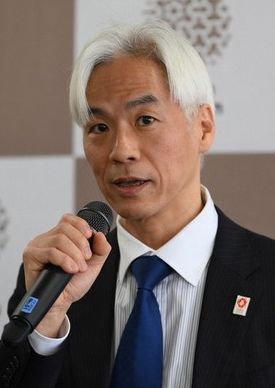
Noriyuki Kuroda
Director General for Trade and Economic Security, Ministry of Economy, Trade and Industry, Government of Japan
Dr John Kunkel
Non-Resident Senior FellowUnited States Studies Centre
Jonathan Black
Former UK Prime Minister’s Sherpa for the G7 and G20 and Deputy National Security Adviser from 2019 to 2025
Abigail Hunter
Abigail Hunter is Executive Director of the Center for Critical Minerals Strategy at Securing America’s Future Energy
Professor Marco Buti
Former Director-General for Economic and Financial Affairs at the European Commission
Dr Takahiro Tsuchiya
Professor at Kyoto University of Foreign Studies, Japan and Visiting Senior Researcher, The University of Tokyo
Dr Merriden Varrall
Founder and CEO of vantage geopol.
Dr Philip Luck
Director, Economics Program and Scholl Chair in International Business, Center for Strategic and International Studies
Septian Hario Seto
Executive Secretary and Member of National Economic Council, Republic of Indonesia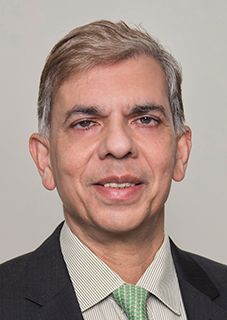
Dr Jayant Menon
Visiting Senior Fellow at the ISEAS-Yusof Ishak Institute
Dr Helen Mitchell
Senior Executive, Australian Government
Dr Michael J. Green
Chief Executive OfficerUnited States Studies Centre
Hayley Channer
Director, Economic SecurityUnited States Studies Centre
Patricia Holmes
First Assistant Secretary, Trade Law and Economic Security Division and Chief Trade Law Officer at the Australian Department of Foreign Affairs and Trade
Olivia Shen
Director, Strategic TechnologiesUnited States Studies Centre
Dr Naoise McDonagh
Non-Resident Fellow, Economic SecurityUnited States Studies Centre
Dr Darren Lim
Senior Lecturer in the School of Politics and International RelationsAustralian National University
Wendy Black
Executive Director Policy, Business Council of Australia
Tracey Winters
Chief Strategy Officer, Santos
Nicci Smith
Foreign Affairs and Defence Correspondent, Australian Financial Review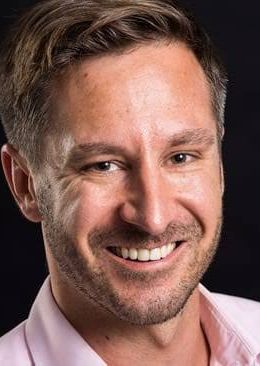
Ryan Heath
Launch Editor, POLITICO AustraliaRegister your interest
To express your interest in attending this event, please email sahara.hoff@sydney.edu.au
Program
Monday, 9 November 2026
Forum: 8.15am-5.00pm AEDT
Networking reception: 5.00pm-6.30pm AEDT
1. Keynote address: Jenny Wilkinson PSM
- Jenny Wilkinson PSM, Secretary of the Australian Treasury
- Introduction by Dr John Kunkel, former Chief of Staff to Australian Prime Minister Scott Morrison
2. Geopolitical shocks and trade-offs: How did governments and business balance conflicting economic and security imperatives in 2026?
A global energy shock, soaring interest rates, and the continued breakdown of the global trading system have placed pressure on supply chains and balance sheets everywhere. A return to the status quo on any of these issues does not look likely. How have different countries, regions and the private sector responded to the year’s geopolitical shocks? Is there a coherent strategy, or are we just muddling through? Where is it possible (and worthwhile) to coordinate our responses?
- How have countries across North America, Northeast and Southeast Asia, the Pacific and Europe responded to geopolitical shocks?
- Does the United States have an economic security strategy? What will be the long-term impact of US tariff policy? What should we make of small strategic groupings like Pax Silica?
- How are Europe’s policies to counter China’s export overcapacity and market competition progressing?
- What are key differences in how governments and business are responding to geopolitics?
- Is it possible to coordinate our various industry policy interventions?
Scene setter | “The systematic weaponisation of trade and its impact on liberal democracies”:
- Daleep Singh (virtual), former US Deputy National Security Advisor (International Economy), National Security Council, White House and Vice Chair and Chief Global Economist, PGIM
Speakers:
- Ms Patricia Holmes, Chief Trade Law Officer and First Assistant Secretary, DFAT
- Mr Noriyuki Kuroda, Director General for Trade and Economic Security, Ministry of Economy, Trade and Industry, Government of Japan
- Professor Marco Buti, Tommaso Padoa-Schioppa Chair at the European University Institute
- Ms Wendy Black, Executive Director of Policy, Business Council of Australia
Moderator:
- Hayley Channer, Director, Economic Security, United States Studies Centre
3. The energy transition: Has the Iran war accelerated or derailed the clean energy transition?
With one-fifth of global oil and natural gas supply blockaded in the Strait of Hormuz, the world turned to coal as a cheap and accessible fuel to fill the gap, leading to record global consumption. At the same time, a boom in power-hungry data centres is putting strain on transitioning energy systems. This panel will discuss what the closure of the Strait of Hormuz means for energy markets and the energy transition in the long term.
- Examining the long-term consequences of Iran’s closure of the Strait of Hormuz
- The essential role that energy is playing in strategic competition, including for AI data centres
- Highlighting the role that all forms of energy play in the Indo-Pacific’s security and stability
- How does Australia balance its role as a regional energy supplier with its domestic needs and net-zero commitment?
- China’s dominance over clean energy technology supply chains and the strategic implications
Speakers:
- Mr Jonathan Black, Center on Global Energy Policy, Colombia University
- Ms Tracey Winters, Chief Strategy Officer, Santos
- Mr Septian Hario Seto, Executive Secretary and Member of National Economic Council, Republic of Indonesia
Moderator:
- Nicci Smith, Foreign Affairs and Defence Correspondent, Australian Financial Review
4. In conversation: How are governments equipping themselves for the new world of weaponised interdependence?
Two-thirds of global trade is now subject to restriction — be it tariffs, export controls,or quotas. The impacts of this are starting to bleed into everyday government decision-making.
- How are governments retooling to navigate this new world of weaponised interdependence?
- What new capabilities, rules or alliances are needed?
- What does it mean to have ‘trusted’ trade partners?
Speakers:
- Mr Jonathan Black, CGEP Distinguished Visiting Fellow; Former Deputy National Security Advisor for the United Kingdom
- Dr Brad Jones, Assistant Governor (Financial System), Reserve Bank of Australia
Moderator:
- Dr Helen Mitchell, Senior Executive, Australian Government
5. The great debates: Weighing the arguments for and against three major economic security related questions around AI, strategic groupings and tariffs
Today’s world is messy. Join us as some of leading experts take you through the pros and cons of three major debates taking place in Australia, our region and around the world. Does it matter where our AI models come from? Are middle powers at the table or on the menu? Can tariffs actually work?
Debate 1 | “Countries should adopt open-source AI models, regardless of their country of origin, to facilitate faster economic growth”
- Ms Olivia Shen, Director, Strategic Technologies, United States Studies Centre
Debate 2 | “Mark Carney is right: Middle Powers need to bypass the hegemons, form their own coalitions, and jointly respond to economic coercion and trade disruption”
- Dr Naoise McDonagh, Senior Lecturer in Geopolitics and International Business at the School of Business and Law, Edith Cowan University
Debate 3 | “Tariff policy, when executed effectively, is the best way to deal with China’s EV and other clean energy overcapacity issues”
- Dr Philip Luck, Director, Economics Program and Scholl Chair in International Business, Center for Strategic and International Studies
Followed by 30-minute Q&A with the panelists.
Moderator:
- Mr Ryan Heath, Launch Editor, POLITICO Australia
6. Supply chain chokepoints: How mineral monopolies and export controls are impacting allied supply chains and industrial bases
Yesterday’s supply chain efficiencies are today’s vulnerabilities. Governments and companies are being forced to reassess heir supply chain dependencies, ownership structures and shipping routes. Are we any closer to breaking China’s grip on critical minerals? What do China’s tighter rare earth export controls and the United States' on-again, off-again semiconductor controls mean for allied defence supply chains? And how can allied nations attract private capital to derisk their supply chains?
- Pressure on defence supply chains globally; impact of critical mineral shortages essential for defence capability; impact of supply chain disruption to Australian companies
- Evaluating current efforts to diversify critical mineral supply chains including buyer’s clubs, price floors, stockpiling and cracking mid-stream processing technology
- How to crowd in private sector investment to critical mineral projects
Speakers:
- Dr Tsuchiya Takahiro, Professor, Kyoto University of Foreign Studies
- Ms Vina Nadjibulla, CEO, Centre for Strategic Statecraft
- Ms Abigail Hunter, Executive Director, Centre for Critical Minerals Strategy, SAFE
7. How do we get this done? Views from the United States, Australia and Japan
After 75 years of the ANZUS alliance and 50 years of the Nara Treaty, the Australia-US-Japan trilateral relationship is at its strongest. Yet, there are clear differences in their domestic politics and economic models and, therefore, differences in their approaches to economic security policy. Where have these three allied nations made progress on shared economic security challenges? What more needs to be done — or done differently?
Speakers:
- Dr Philip Luck, Director, Economics Program and Scholl Chair in International Business, Center for Strategic and International Studie
- Dr Darren Lim, Senior Lecturer, Australian National University
- Dr Jayant Menon, Former Lead Economist in the Office of the Chief Economist at Asian Development Bank and Visiting Senior Fellow, Institute for Southeast Asian Studies
Moderator:
- Dr Merriden Varrall, Founder and CEO of vantage geopol.


